
.webp)
.webp)
.webp)


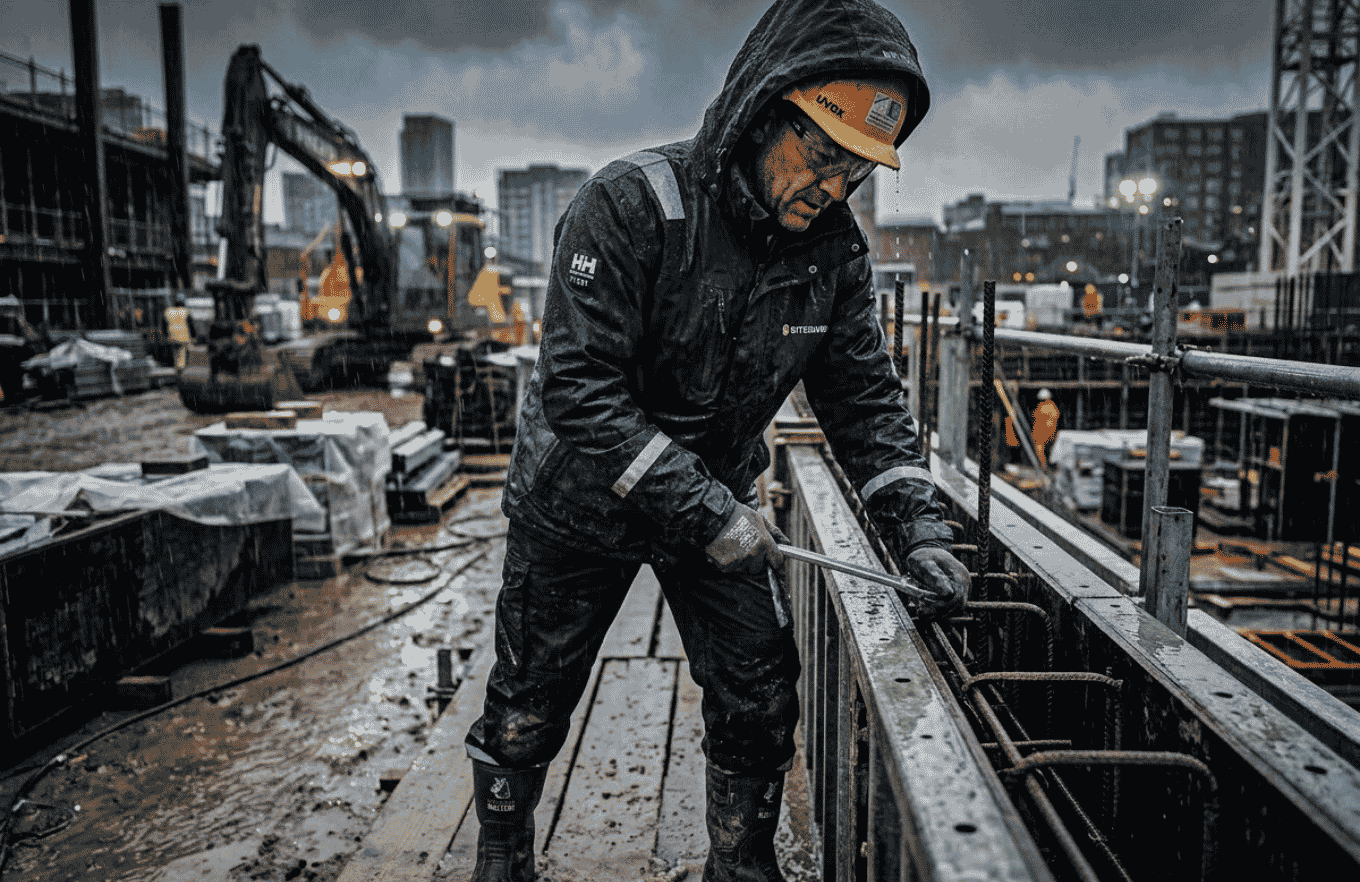
Learn how to choose industrial workwear for changing weather, considering rain protection, breathability, layering, durability, fit and relevant standards.
Selecting suitable workwear for changing weather conditions requires more than choosing garments that appear durable. A reliable industrial workwear supplier considers rain, wind, cold, heat, sun exposure, physical activity, comfort and workplace demand before recommending a suitable solution.
Outdoor workers may begin a shift in dry conditions and later face heavy rain, strong winds, or falling temperatures. Their clothing must provide suitable protection without restricting movement or creating excessive heat. The right workwear should therefore combine practical weather protection, durability, comfort, and functionality for the specific environment.
All-weather workwear must balance protection with everyday usability. A waterproof garment may block rain effectively, but poor breathability can make physically demanding work uncomfortable. Similarly, excessive insulation can become unsuitable when workers move between indoor and outdoor environments.
Before purchasing, businesses should consider expected weather, exposure duration, physical activity, temperature changes, and compatibility with other PPE. Layering and modular designs can be particularly useful where conditions change throughout the working day.
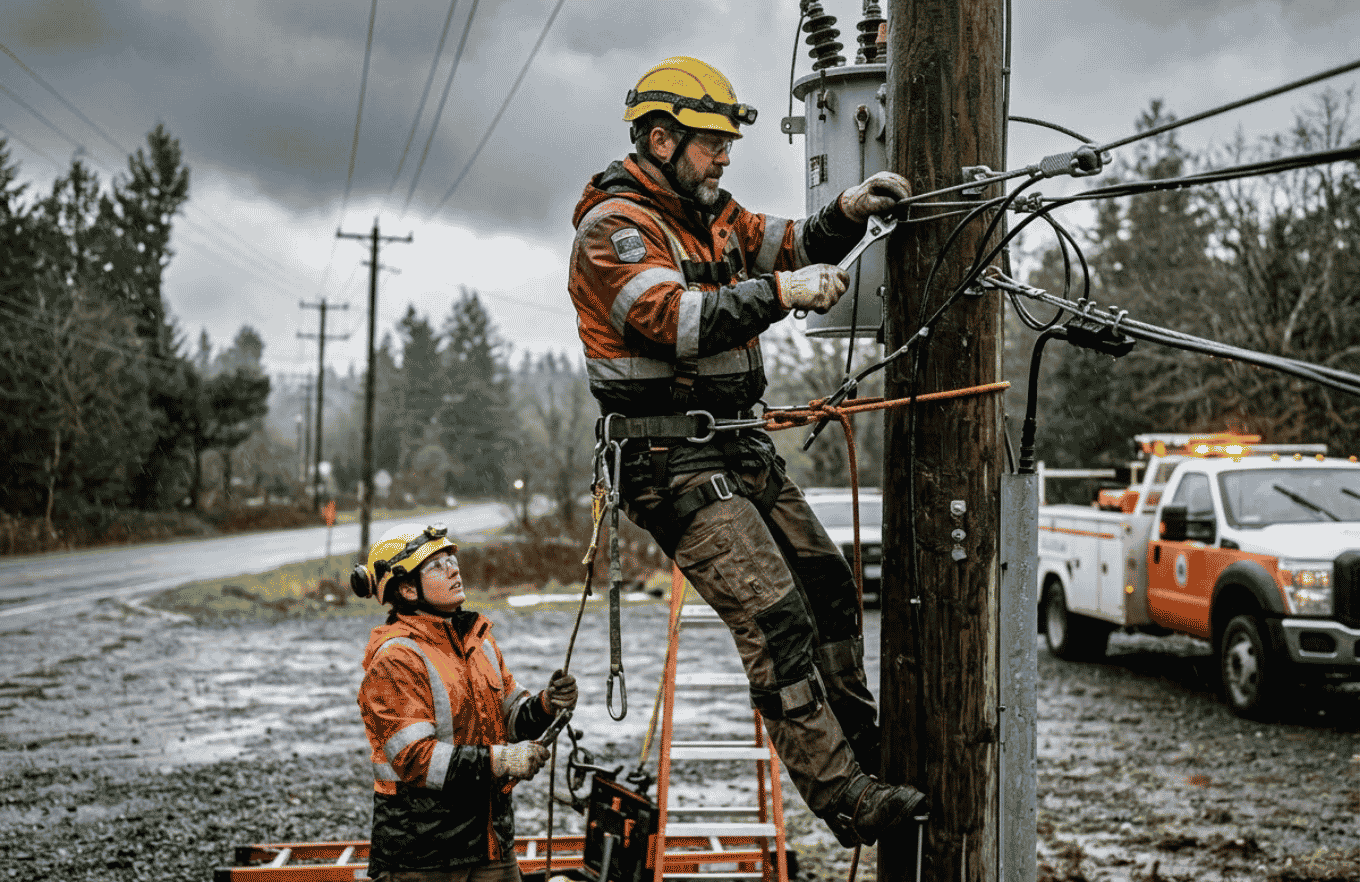
Rain and wind protection should begin with the outer material but should not end there. Seams, closures, hoods, cuffs, collars, and storm flaps all contribute to practical coverage.
An industrial rainwear manufacturer should provide clear information about the garment's intended conditions, construction and documented performance. Buyers should verify specific claims rather than assuming every waterproof-looking jacket provides the same level of protection.
Workers performing physical tasks generate body heat, making ventilation an important consideration. Underarm openings, mesh panels, breathable fabrics, and appropriate garment construction can help manage heat and moisture.
This is particularly useful for construction, utilities, transportation, maintenance, and other outdoor jobs where workers remain active for extended periods.
Industrial garments must withstand repeated movement, abrasion, tools, equipment, and demanding work surfaces. Reinforced seams and stress-point construction can improve durability, while ergonomic patterning helps maintain freedom of movement.
A protective clothing manufacturer should balance fabric strength with garment weight. Extremely heavy clothing may improve durability but can become uncomfortable during long shifts.
Hot conditions require lightweight systems that manage heat and moisture without compromising hazard-specific protection. Buyers should consider ventilation, drying time, fabric weight, sun exposure, physical workload and access to shade or rest breaks. Where ultraviolet protection is claimed, request the relevant test method and rating. Weather comfort features do not replace a workplace heat-risk assessment.
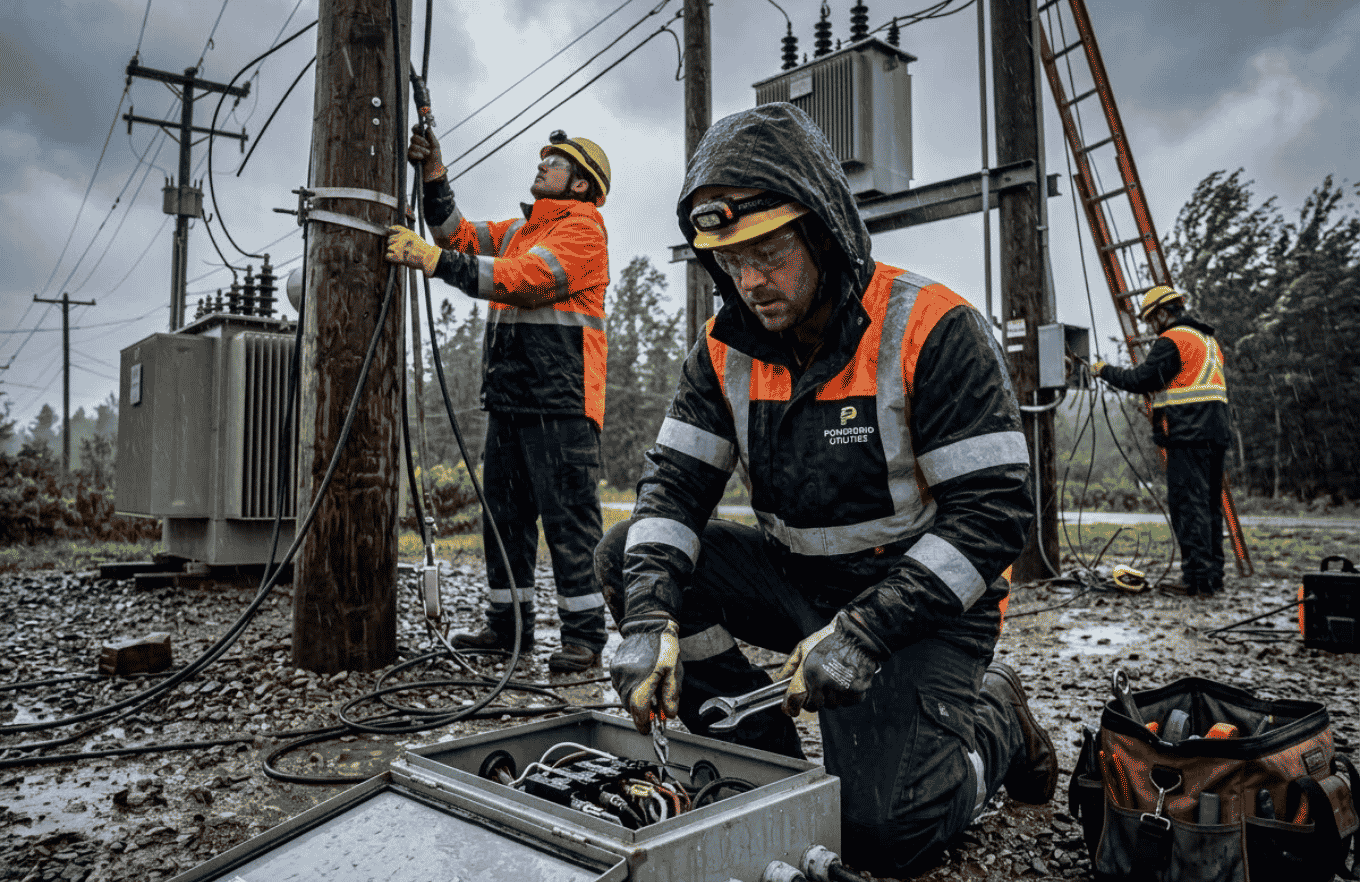
When businesses need workwear that combines weather protection with practical industrial functionality, garment design becomes particularly important. We develop workwear with attention to material selection, construction, comfort, and the conditions in which employees actually work.
Our product range includes adaptable garments designed to address different aspects of outdoor work. Two examples demonstrate how weather protection and everyday industrial durability can work together.
The All-Weather Waterproof 2-in-1 Performance Jacket combines an outer shell intended for wet conditions with a detachable inner fleece jacket. This allows workers to adjust their clothing as temperatures change rather than relying on a single fixed layer. Buyers should request documented rain-protection and breathability performance for the required market and application.
The inner fleece can also be worn separately. The outer shell features a concealed zipper with storm flap, adjustable hood, fleece-lined hood and collar, and underarm ventilation with a zip opening and mesh panel. A chest zip pocket provides secure storage for essential items.
This modular design makes the jacket particularly practical for outdoor workers who move between different weather conditions during a shift.
For lower-body protection and everyday industrial performance, the 9145 Hiflex Pro Utility Trouser provides a durable option for demanding trade and outdoor environments.
The current product specification describes a 345 GSM canvas with a 1/1 canvas structure, reinforced seams, double stitching and rivet reinforcement at stress points. Buyers should confirm these specifications against the approved product data sheet before ordering.
Multiple carpenter pockets, a hammer loop, side utility pocket and reinforced back pockets provide practical storage. Its ergonomic straight fit and paneled construction support movement, while the cotton construction can support everyday comfort in suitable conditions. The trouser should not be treated as waterproof unless separate performance documentation confirms that claim.
EN ISO 13688 covers general requirements for protective clothing, including ergonomics, sizing, marking and information supplied by the manufacturer. It does not by itself demonstrate waterproof or rain-protection performance. Buyers should request current certification, test reports and classifications for the specific garment and sales market, including the applicable rain-protection standard where weather resistance is required.
All-weather garments are useful wherever employees regularly work outdoors or move between indoor and outdoor environments. Common applications include:
● Construction and civil engineering
● Utilities and infrastructure maintenance
● Transportation and logistics
● Road and railway maintenance
● Agriculture and landscaping
● Oil, gas, and industrial maintenance
● Municipal and facility services
However, weather protection should not be confused with protection against specialized hazards. Chemical, flame, electrical, or high-visibility requirements need separate consideration where applicable.
We combine garment development, material selection, practical construction and manufacturing expertise to support demanding workwear requirements. Our approach focuses on developing garments around workplace conditions rather than relying on generic uniform specifications.
For businesses purchasing in volume, this manufacturing approach can also support sampling, customization, sizing, technical specifications, and consistent production. Buyers can establish requirements before bulk manufacturing to ensure the final garments match the intended application.
Businesses can also select different garment types according to seasonal and operational requirements instead of forcing one uniform solution across every working condition.
Before placing an order, businesses should assess:
● Weather, temperature and layering requirements
● Documented rain-protection and breathability classifications
● Seam sealing, closures and ventilation
● Durability, garment weight and performance after laundering
● Fit, movement and compatibility with existing PPE
● Applicable standards, certification and test documentation
● Care instructions, customization and branding needs
An industrial rainwear manufacturer should provide clear technical information about construction, intended use, test results and available specifications.
Choosing workwear for changing weather requires a practical balance between weather protection, durability, comfort, mobility and functionality. Modular garments can provide flexibility as conditions change, while durable work trousers can support everyday industrial tasks.
An experienced protective clothing manufacturer can help businesses align materials, construction, fit and technical requirements with actual workplace conditions.
Contact Samad Workwear to discuss customized workwear, product sampling, technical specifications and bulk manufacturing requirements.
Businesses should evaluate weather exposure, temperature, documented rain performance, breathability, durability, fit, PPE compatibility, care requirements and applicable standards.
A 2-in-1 design can be suitable where its materials, insulation, documented rain performance and fit match the expected conditions. Workers may use the outer shell, inner fleece or both layers according to the product instructions and workplace requirements.
Breathable materials and ventilation features can help manage body heat and moisture, improving comfort during physically demanding outdoor work.