
.webp)
.webp)
.webp)


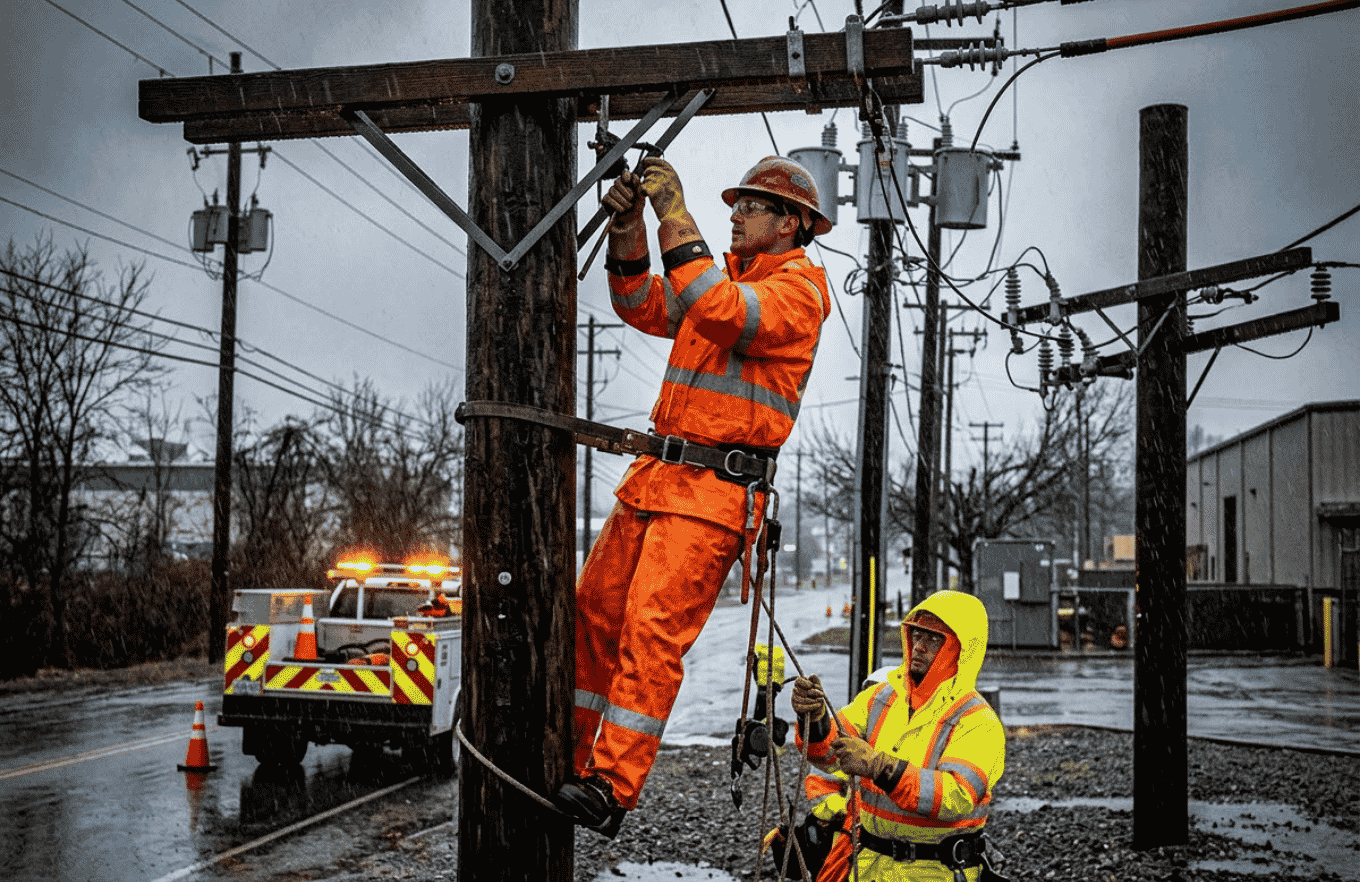
Learn how to choose industrial rainwear by evaluating weather exposure, water penetration resistance, breathability, durability, fit, PPE compatibility and applicable standards.
Choosing the right industrial rainwear manufacturer requires more than comparing waterproof fabrics. Industrial rainwear should be selected according to weather exposure, physical activity, workplace hazards, garment construction and compatibility with other PPE.
Workers may face rain, wind, changing temperatures and long outdoor shifts. A reliable industrial workwear supplier should therefore help buyers evaluate the complete garment, its documented performance and its intended use rather than appearance or price alone.
Industrial rainwear is used in environments where garments may face repeated movement, abrasion, tools, equipment and prolonged exposure to changing weather.
A jacket that looks waterproof does not automatically provide suitable workplace protection. Buyers should consider rainfall intensity, exposure duration, wind, temperature, physical workload and whether employees move between indoor and outdoor areas.
Rainwear should also be reviewed as part of the wider PPE system. Where workers face electrical, chemical, flame, high-visibility or other hazards, rain protection does not replace the applicable hazard-specific protective requirements.
Rain protection depends on more than the outer fabric. Resistance to water penetration, seam sealing, zippers, storm flaps, hoods, cuffs, collars and pocket construction can all affect the performance of the finished garment.
An experienced industrial rainwear manufacturer should provide clear information about the garment's intended use, construction and limitations. Where rain-protection performance is claimed, buyers should request the applicable classification and test documentation for the exact product. ISO 24232:2024 covers protective clothing against rain; the relevant regional adoption and edition should be confirmed for the target market.
Workers performing physical tasks generate heat and moisture. Poor breathability can make waterproof clothing uncomfortable and increase thermal strain during extended use.
Breathable materials, protected ventilation openings and suitable garment weight can help manage heat and moisture. Any vent or panel should be designed so that it does not compromise the garment's intended rain-protection performance.
Comfort should be assessed alongside protection because excessively heavy or restrictive rainwear may interfere with movement, increase heat burden and discourage correct use.
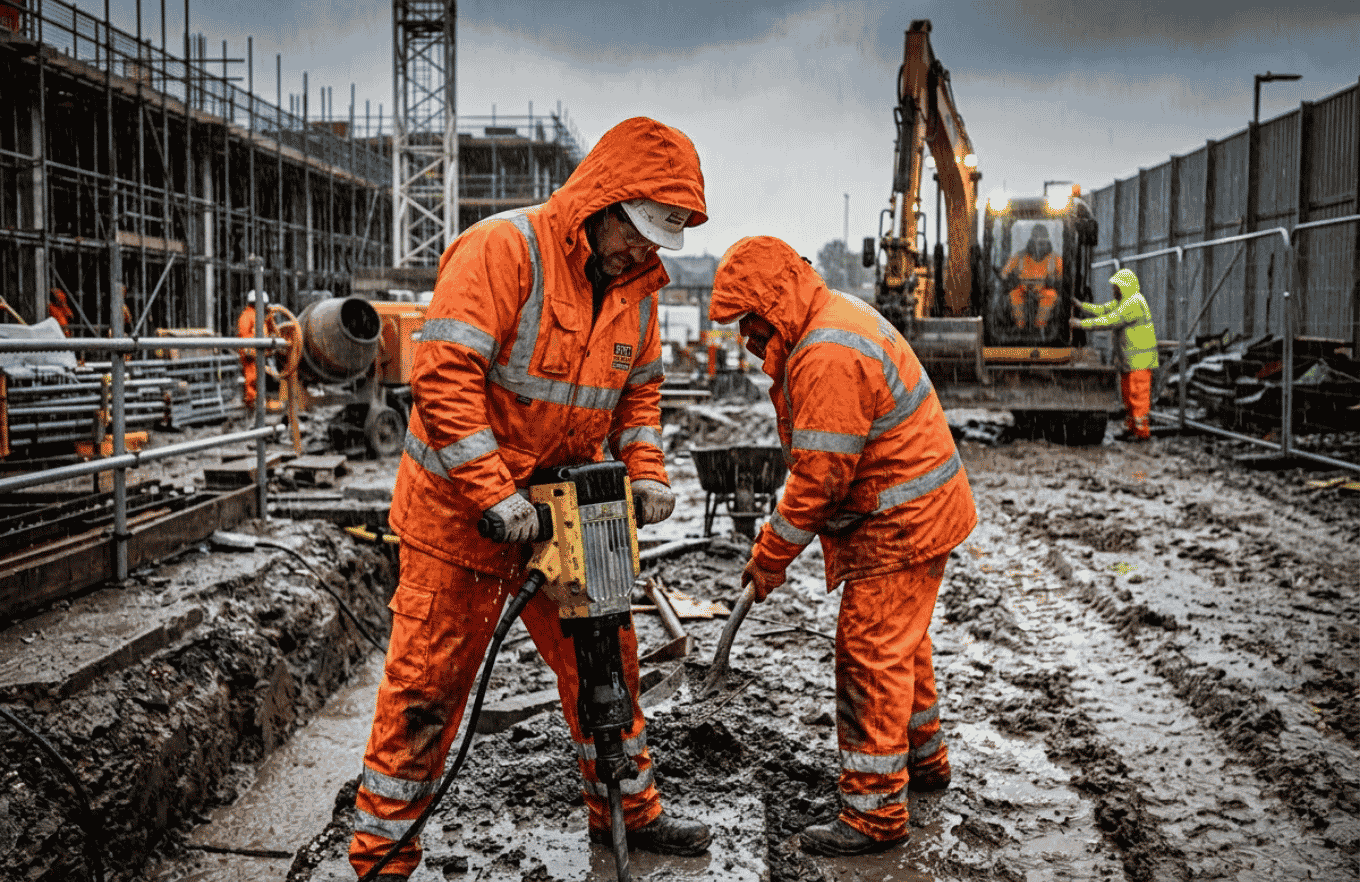
Industrial garments may be exposed to kneeling, climbing, tools, rough surfaces and repeated movement. Buyers should therefore review seam strength, reinforcement, abrasion resistance, fabric durability and stress-point construction.
A capable protective clothing manufacturer should balance durability with garment weight and mobility. Heavier construction is not automatically better if it creates unnecessary restriction or heat burden.
Rainwear should provide sufficient coverage without becoming excessively loose or restrictive. Workers should be able to reach, bend, and climb without creating gaps or interfering with tools, harnesses, or other PPE.
Sizing should account for the layers worn underneath. An experienced industrial workwear supplier can support size-set reviews and provide samples before bulk production.
Useful features should match the actual task rather than being added unnecessarily.
Depending on the application, buyers may consider:
● Adjustable hoods and cuffs
● Protected front closures and storm flaps
● Protected ventilation openings or breathable construction
● Secure pockets
● Reinforced high-wear areas
● Compliant high-visibility materials where visibility protection is required
● Ergonomic construction for movement
Each feature should be reviewed as part of the finished garment and its intended workplace conditions. Reflective tape alone does not make a garment high-visibility certified; any such claim should be supported by complete-garment compliance with the applicable standard, such as ISO 20471.

Industrial rainwear may be required where employees work outdoors or move frequently between indoor and outdoor environments, including:
● Construction and civil engineering
● Utilities and infrastructure
● Road and railway maintenance
● Transportation and logistics
● Oil and gas operations
● Agriculture and landscaping
● Municipal services
● Industrial maintenance
Industry name alone should not determine the garment. The actual task, rain exposure, physical workload, and other workplace hazards should guide selection. Rainwear for precipitation should not automatically be treated as protection against water jets, waves, pressure washing or chemical splashes.
Samad Workwear supports businesses with workwear development based on intended applications, garment construction, fit and production requirements.
As a protective clothing manufacturer, Samad Workwear can support specification discussions, sampling, sizing, customization and bulk manufacturing. Buyers should confirm current product information, test reports and documented performance claims for the exact garment before approval.
For larger orders, a reliable industrial rainwear manufacturer should maintain consistent materials, sizing, seam sealing and construction between approved samples and production batches.
Before placing an order, businesses should review:
● Expected weather and exposure duration
● Documented resistance to water penetration and breathability performance
● Seam, closure and hood construction
● Breathability and ventilation
● Durability and garment weight
● Fit, movement and layering requirements
● Compatibility with other PPE
● Applicable standards, classifications and technical documentation
● Care instructions, maintenance and performance after applicable pretreatment
● Customization, samples and production consistency
A reliable industrial workwear supplier should provide specifications corresponding to the exact garment being offered. A protective clothing manufacturer should also explain product limitations where additional workplace hazards require separate protective performance.
Choosing industrial rainwear requires more than selecting a waterproof outer layer. Weather exposure, resistance to water penetration, breathability, construction, durability, fit, movement and PPE compatibility should all be considered before approval.
Working with an experienced supplier can help businesses define these requirements, review samples and maintain consistency during bulk production. Buyers should still verify documented performance for the exact garment and intended application rather than relying on general waterproof or weather-protection claims.
Equip your workforce with dependable industrial rainwear from Samad Workwear, tailored to your requirements. Contact us for samples, customization options, technical specifications, and bulk-order support.
Businesses should review finished-garment construction, documented rain-protection classification, breathability, durability, fit, technical information, limitations, and production consistency.
Yes, provided the garment is correctly sized and compatible with the other PPE required for the task. The complete PPE combination should be evaluated before approval.
Breathability and protected ventilation can help manage heat and moisture during physically demanding outdoor work. These features must be balanced with the required level of rain protection.