
.webp)
.webp)
.webp)


Discover why flame-resistant workwear is crucial for industrial safety and compliance, ensuring worker protection and durability in high-risk environments.
In modern industrial environments, workplace safety is more critical than ever. Flame-resistant workwear has become a vital component of protective clothing, offering workers essential safeguards against fire, heat, and arc-related hazards. Industries such as oil and gas, electrical, and heavy manufacturing rely on these garments to prevent serious injuries and ensure compliance with safety regulations. Leading providers, including Samad Outerwear, offer custom workwear uniforms designed to meet international standards while integrating eco-conscious practices. By investing in sustainable safety clothing for industries, companies not only protect their workforce but also demonstrate a commitment to long-term environmental responsibility. High-quality flame-resistant garments are now a baseline requirement for any serious safety program.
Flame-resistant workwear is specifically engineered to resist ignition and prevent the spread of flames in hazardous work environments. Unlike ordinary fabrics, FR garments either self-extinguish or maintain structural integrity when exposed to high heat. This protective property is particularly crucial in sectors like petrochemicals, electrical work, and welding, where fire and arc flash risks are prevalent.
Key benefits of investing in FR workwear include:
● Minimizing burn injuries in high-risk environments
● Reducing workplace accident severity
● Complying with OSHA and NFPA regulations
● Enhancing workforce confidence and productivity
Samad Outerwear integrates international standards such as NFPA 2112 for flash fire protection, IEC 61482-2 for arc flash, and EN ISO 11612 for industrial heat resistance, ensuring maximum safety without compromising comfort.
Industrial FR garments are designed to address specific hazard types:
1. Basic FR Workwear
● Suitable for moderate heat exposure
● Self-extinguishing fabrics
● Standard compliance: EN ISO 11612
2. Inherent FR Workwear
● Fabrics naturally resistant to flames
● Long-lasting protection without chemical treatment
● Produced with common fibers such as modacrylic, aramid (Nomex/Kevlar type), FR viscose like Lenzing FR, PBI fibers, and Preox fibers
● Ideal for high-temperature industrial environments such as arc flash, oil & gas, and heavy industrial applications
3. Arc Flash Workwear
● Protects against electrical arc hazards
● Meets IEC 61482-2 standards
● Reinforced areas for high-risk tasks
Samad Outerwear produces these categories using high-quality woven fabrics, focusing on durability and protective performance. Their garments balance functional safety with ergonomic design, enabling workers to perform tasks efficiently.
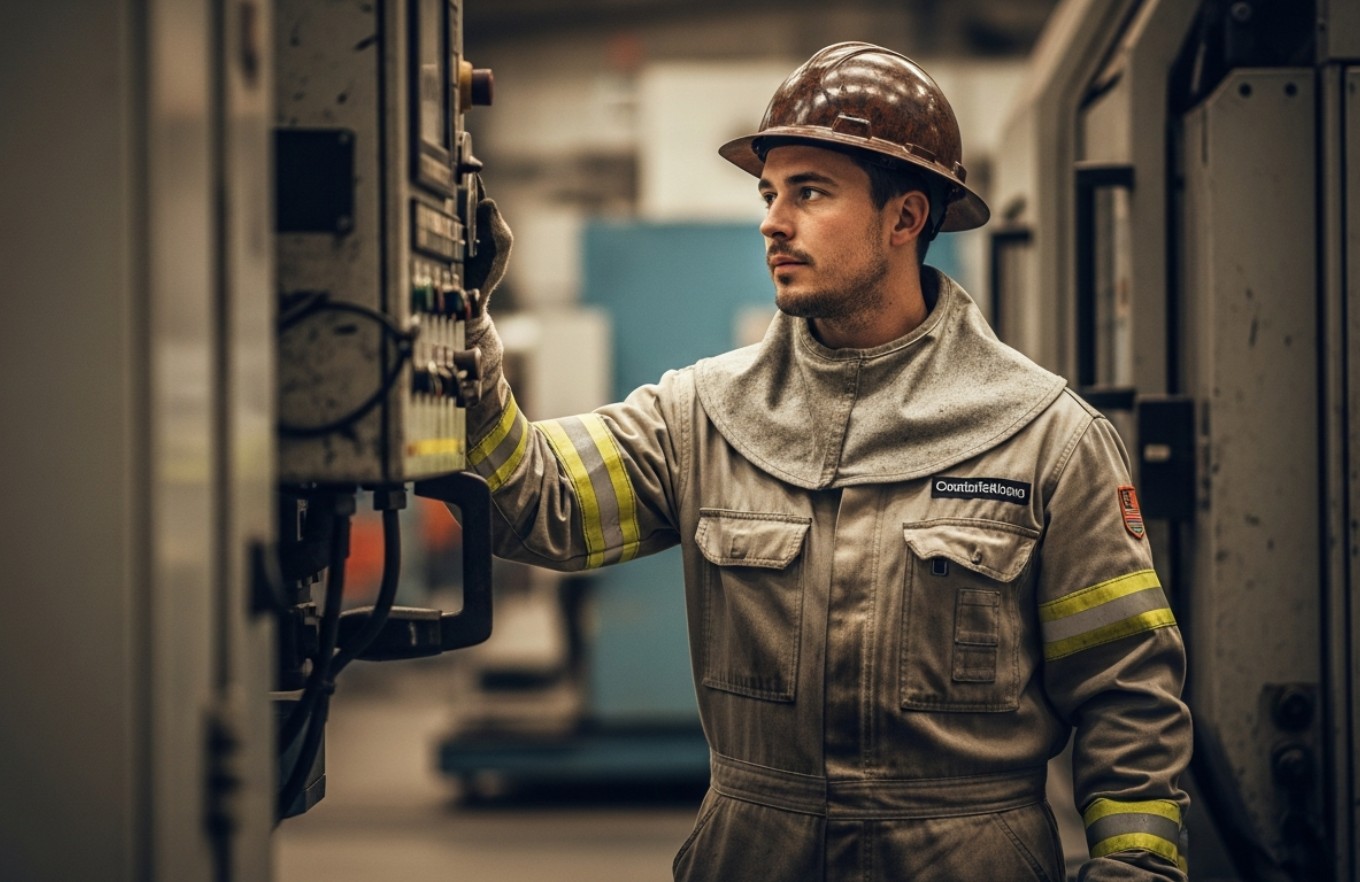
Adherence to safety standards ensures that flame-resistant workwear performs effectively in real-world conditions. Some of the most recognized standards include:
NFPA 2112 – Flash fire protection for industrial garments
EN ISO 11612 – Performance requirements for protective clothing against heat and flames
IEC 61482-2 – Arc flash protection in electrical work
ASTM F1506 – Evaluates fabric performance under electrical hazard conditions
By choosing a certified safety clothing manufacturer like Samad Outerwear, industries can guarantee that their workforce receives garments tested for compliance and reliability.
Here is a summary of international standards and the specific hazards they protect against in industrial FR garments.
Standard
NFPA 2112
Flash fire (Hazard Protection)
Petrochemical, oil & gas, industrial fire risks (Typical Application)
EN ISO 11612
Heat & flame (Hazard Protection)
General industrial, welding, foundries (Typical Application)
IEC 61482-2
Electrical arc flash (Hazard Protection)
Electrical utilities, arc flash environments (Typical Application)
EN ISO 11611
Welding & molten metal (Hazard Protection)
Welding, cutting, fabrication (Typical Application)
ASTM F1506
Electrical hazard resistance (Hazard Protection)
Electrical workwear, utility workers (Typical Application)
EN 1149
Anti-static / ESD (Hazard Protection)
Electronics, petrochemical, flammable environments (Typical Application)
Customizing FR garments provides additional advantages beyond standard protection:
● Tailored fit for improved mobility and comfort
● Reinforced panels for high-abrasion areas
● Integrated pockets and tool access features
● Branding or color coding for workforce identification
Options for eco-friendly materials, reducing environmental footprint
Samad Outerwear offers bespoke custom workwear uniforms, ensuring that companies can meet specific operational requirements while adhering to sustainable manufacturing practices. Eco-friendly fabrics, including recycled polyester and OEKO-TEX certified materials, are increasingly used to produce sustainable safety clothing for industries.

Providing effective FR garments involves addressing several challenges:
Challenge 1: Comfort vs. Protection
Heavier fabrics offer protection but may reduce comfort
Solution: Use high-loft woven fabrics that maintain flame resistance while remaining breathable
Challenge 2: Durability in Harsh Environments
Frequent washing and high abrasion can compromise FR performance
Solution: Reinforced stitching and high GSM fabrics enhance durability
Challenge 3: Regulatory Compliance
Varied international standards can be complex to meet
Solution: Partnering with Samad Outerwear, a certified FR workwear supplier, ensures adherence to NFPA, IEC, and EN standards
These solutions ensure that industrial teams remain protected without compromising operational efficiency or comfort.
Feature
Fabric Type
Treated cotton/poly blends (Basic FR Workwear)
Naturally FR fibers (Inherent FR Workwear)
Woven high-performance fabrics (Arc Flash Workwear)
Protection Level
Moderate (Basic FR Workwear)
High (Inherent FR Workwear)
Electrical & thermal (Arc Flash Workwear)
Standards Compliance
EN ISO 11612 (Basic FR Workwear)
EN ISO 11612 (Inherent FR Workwear)
IEC 61482-2 (Arc Flash Workwear)
Durability
Moderate (Basic FR Workwear)
Long-lasting (Inherent FR Workwear)
Reinforced areas (Arc Flash Workwear)
Suitable For
Light industrial (Basic FR Workwear)
Heavy industrial (Inherent FR Workwear)
Electrical, arc flash (Arc Flash Workwear)
This table highlights how Samad Outerwear delivers versatile, standards-compliant FR garments to meet diverse industrial safety needs.
The role of flame-resistant workwear in industrial safety cannot be overstated. By combining advanced fabrics, international standards, and custom designs, manufacturers ensure that workers remain protected from fire and thermal hazards. Leading providers like Samad Outerwear produce high-quality custom workwear uniforms, offering reliability, comfort, and eco-conscious manufacturing. Investing in certified FR garments is not just a regulatory requirement; it is a strategic step to protect human life, enhance productivity, and support sustainable operations. Modern industrial safety programs increasingly recognize that effective FR outerwear is a cornerstone of responsible workforce management.
Contact Samad Outerwear today to acquire certified flame-resistant workwear that ensures maximum safety and industrial compliance.
Basic FR workwear relies on chemical treatments, while inherent FR garments are naturally flame-resistant and maintain protection over time.
Yes, manufacturers like Samad Outerwear offer custom workwear uniforms with reinforced panels, pockets, and ergonomic designs.
Absolutely, eco-friendly fabrics used by certified manufacturers meet all safety standards while reducing environmental impact.