
.webp)
.webp)
.webp)


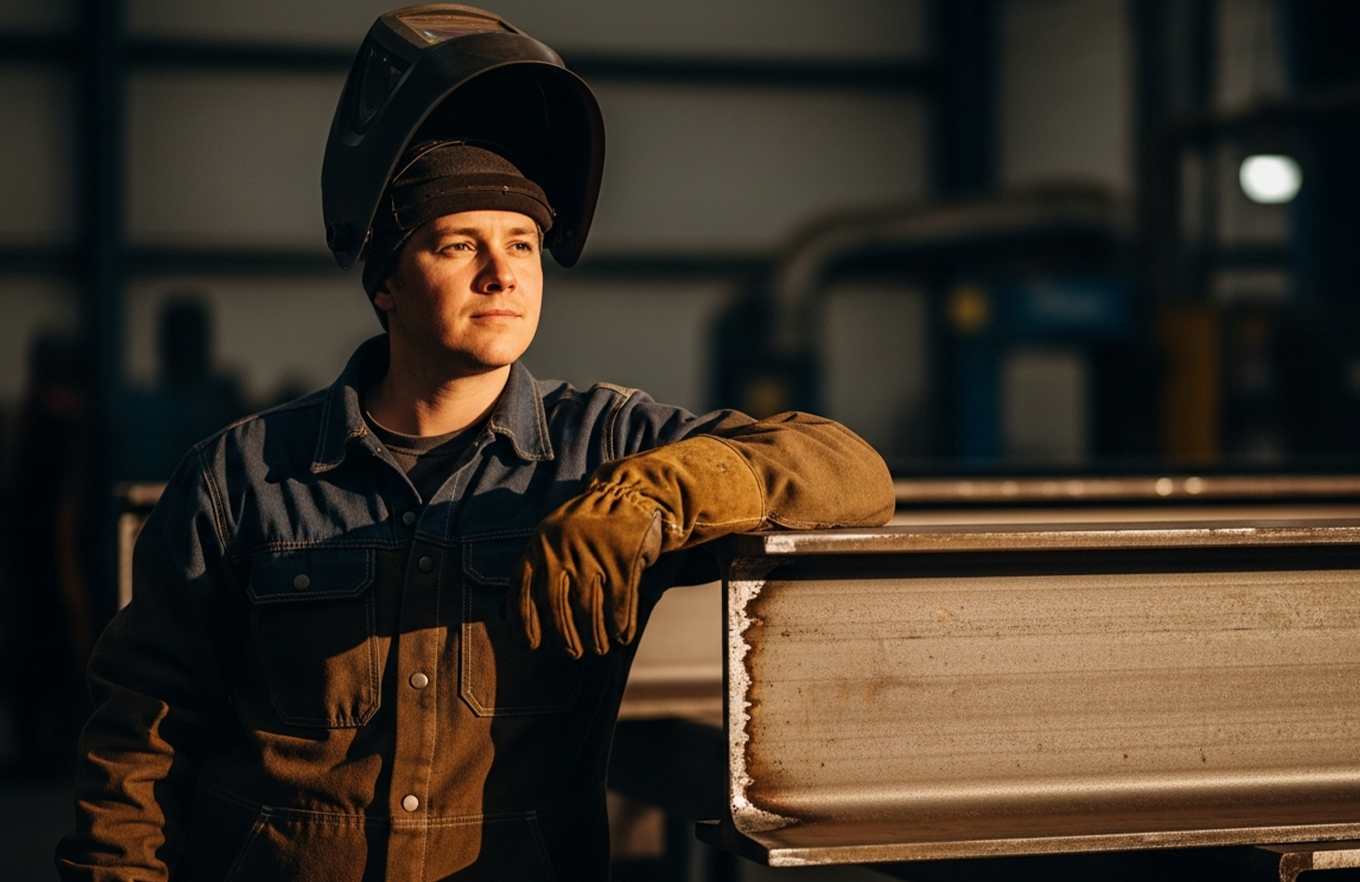
This guide explains why a workwear manufacturer Pakistan relies on polymer-based welding workwear for protection, durability, and performance.
A workwear manufacturer Pakistan serving heavy industrial sectors must address complex safety challenges found in specialized metal operations. Welding environments expose workers to molten metal splash, radiant heat, mechanical abrasion, and prolonged physical stress. Polymer-based welding workwear has emerged as a targeted solution for operations where traditional textiles alone may not deliver consistent performance.
Unlike conventional fabrics, polymer-based garments are engineered to withstand intense exposure while maintaining structural integrity. A workwear manufacturer Pakistan evaluates polymer materials for their resistance properties, controlled flexibility, and suitability for high-risk applications. As metal fabrication processes become more specialized, demand has increased for protective solutions that align safety, durability, and long-term usability in demanding environments.
Polymer-based welding workwear is developed to manage hazards that occur during advanced metal operations. These garments are constructed using engineered polymer layers that resist ignition, surface degradation, and molten metal adhesion. A safety clothing manufacturer selects polymer systems based on how they respond under direct heat exposure and mechanical stress. Unlike untreated fabrics, polymer-based materials can maintain barrier performance without rapid fiber breakdown.
In specialized welding tasks such as structural fabrication, pipeline welding, and heavy machinery repair, garments must endure repetitive exposure to sparks and slag. Samad Outerwear integrates polymer-based components where traditional woven fabrics require reinforcement. This approach ensures garments perform consistently across long wear cycles while supporting operator safety in high-risk zones.
While both traditional FR textiles and polymer-based materials are used in welding garments, their performance differs significantly under demanding industrial conditions. Understanding these differences helps industrial buyers and safety managers select workwear that aligns with exposure levels, task intensity, and long-term durability requirements.
Performance Factor
Heat Resistance
Designed to resist ignition but may degrade over time with repeated high-heat exposure(Traditional FR Textile)
Engineered to maintain structural stability under sustained radiant and contact heat(Polymer-Based Welding Workwear)
Molten Metal Splash Protection
Provides basic protection, but molten metal can adhere to fabric surfaces(Traditional FR Textile)
Resists molten metal adhesion, reducing burn risk and surface damage(Polymer-Based Welding Workwear)
Abrasion Resistance
Moderate abrasion resistance, prone to wear in high-contact areas(Traditional FR Textile)
High abrasion resistance, especially in reinforced zones such as sleeves and fronts(Polymer-Based Welding Workwear)
Longevity
Shorter service life in heavy welding environments due to fiber breakdown(Traditional FR Textile)
Extended garment lifespan due to reinforced polymer construction(Polymer-Based Welding Workwear)
Best Use
General welding and light to moderate metal operations(Traditional FR Textile)
Specialized welding tasks, heavy fabrication, and high-risk industrial environments(Polymer-Based Welding Workwear)
One of the primary reasons polymer-based welding workwear is used lies in its controlled heat response. Polymers are engineered to resist melting, dripping, or shrinking when exposed to high temperatures. A workwear manufacturer Pakistan evaluates these properties carefully to ensure compliance with welding safety expectations. In environments where molten metal splash is frequent, polymer-based surfaces prevent adhesion, reducing burn risk and garment failure.
Welding operations place significant mechanical stress on garments due to repetitive movement, contact with sharp edges, and tool interaction. Polymer-based workwear offers enhanced abrasion resistance compared to standard textile-only constructions. A safety clothing manufacturer incorporates polymers to reinforce high-wear zones such as sleeves, fronts, and lower panels.
This reinforcement extends garment lifespan, which is critical for industrial buyers seeking long-term value. Samad Outerwear applies polymer reinforcements strategically to maintain flexibility while improving durability. This balance allows garments to remain wearable throughout extended shifts without compromising protective performance.
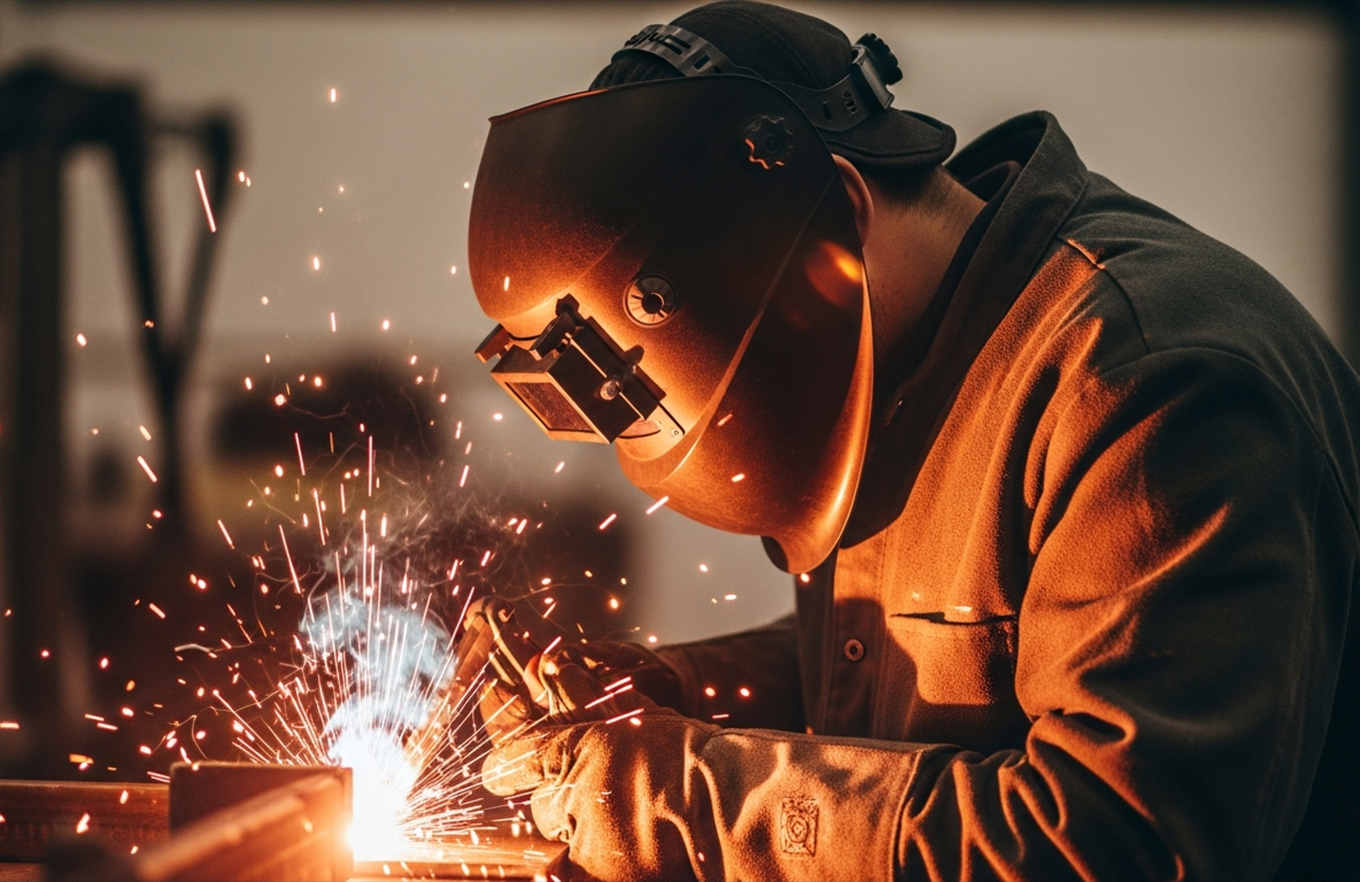
In specialized metal operations, garment failure often occurs at stress points. Polymer-based welding workwear addresses this issue through reinforced layering and structured panel design. A workwear manufacturer in Pakistan focuses on maintaining seam integrity and resistance to tearing, ensuring garments remain functional even in abrasive environments.
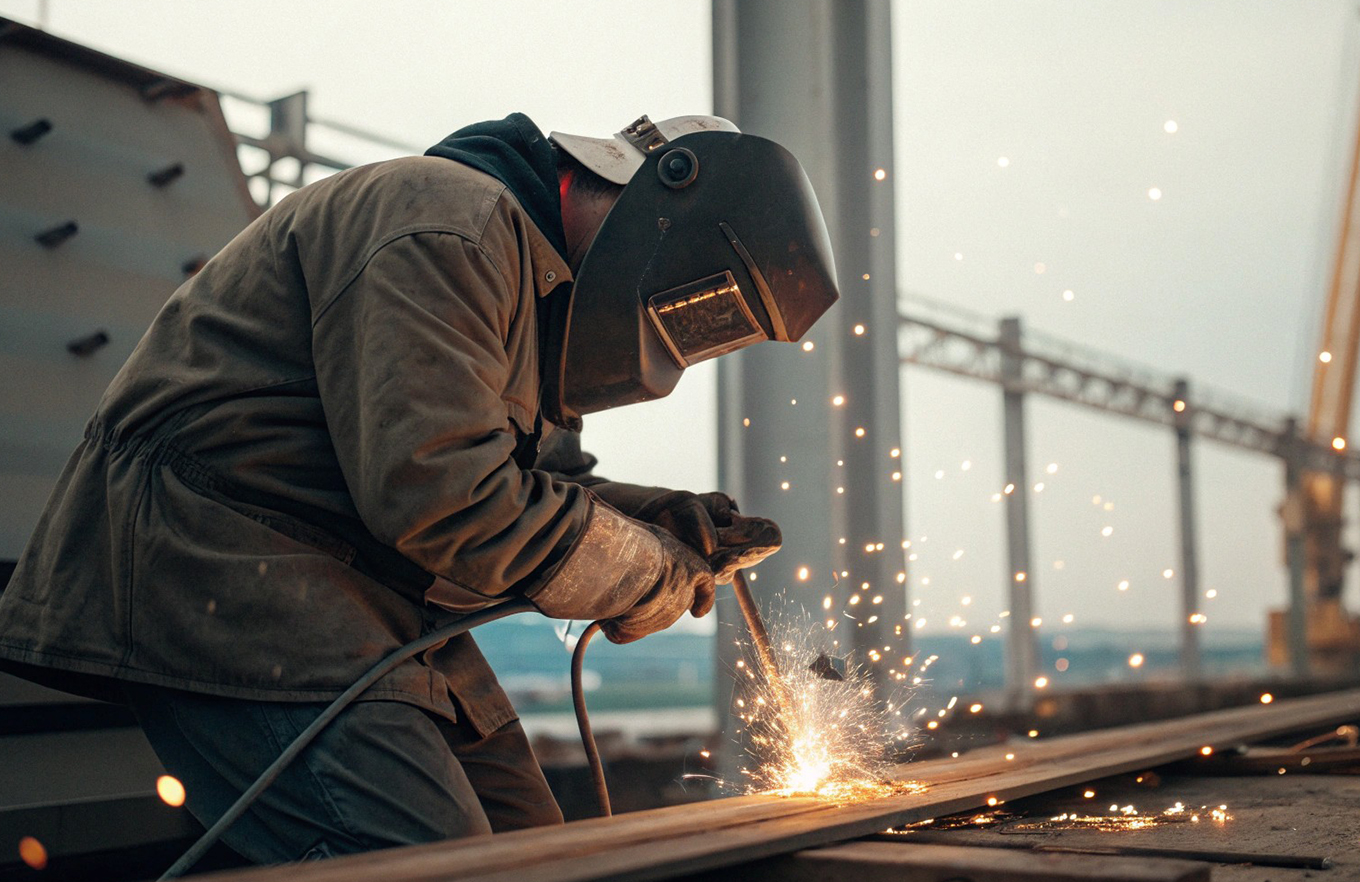
While protection is essential, mobility cannot be overlooked. Polymer-based welding workwear is designed to provide structured protection without excessive rigidity. Modern polymer systems allow controlled flexibility, enabling workers to perform the precise movements required in specialized welding tasks.
A safety clothing manufacturer evaluates garment ergonomics alongside protective performance. Samad Outerwear develops polymer-based garments that support natural movement patterns, reducing fatigue during long shifts. This balance between structure and flexibility improves overall wearability without diminishing safety.
Extended exposure to high temperatures can increase physical strain. Polymer-based welding workwear helps manage heat transfer by acting as a barrier while allowing internal garment systems to regulate airflow. A workwear manufacturer Pakistan considers these factors when developing garments intended for continuous use in high-temperature environments.
Polymer-based welding garments are widely used in applications requiring higher levels of protection, including heavy fabrication, pressure vessel welding, and infrastructure projects. A safety clothing manufacturer ensures that these garments align with applicable welding safety standards and operational requirements.
Samad Outerwear applies compliance-driven design principles when integrating polymer materials into welding garments. This ensures that garments are suitable for both routine and specialized welding tasks without sacrificing durability or protective integrity.
Sustainability has become an important consideration even in heavy-duty protective clothing. A Sustainable Workwear Manufacturer in Pakistan focuses on responsible polymer sourcing, waste reduction, and long garment life cycles. Durable polymer-based garments reduce replacement frequency, lowering overall environmental impact.
Eco-Friendly Workwear Production in Pakistan emphasizes efficiency in material use and manufacturing processes. Samad Outerwear aligns polymer-based welding workwear development with sustainability goals by prioritizing longevity and performance consistency.
Selecting polymer-based welding garments requires an understanding of task-specific hazards and operational conditions. A workwear manufacturer Pakistan evaluates exposure levels, movement requirements, and wear cycles before recommending polymer-based solutions. These garments are not intended to replace all welding apparel but to support specialized applications where enhanced protection is required.
A safety clothing manufacturer plays a key role in guiding buyers toward appropriate material choices, ensuring protection aligns with real-world use rather than generic specifications.
Polymer-based welding workwear plays a critical role in specialized metal operations where traditional materials alone may fall short. A workwear manufacturer Pakistan relies on polymer systems to enhance heat resistance, abrasion protection, and garment longevity. When developed responsibly, these garments offer a practical balance between protection, mobility, and durability. By partnering with experienced manufacturers, industrial buyers can ensure welding workwear meets the demands of high-risk environments while supporting operational efficiency.
Contact our team today to explore polymer-based welding workwear solutions designed for specialized industrial metal operations.
A workwear manufacturer Pakistan uses polymer-based garments to improve heat resistance, abrasion protection, and durability in high-risk welding environments.
Yes, polymer-based welding workwear is designed for extended wear in demanding metal operations without compromising protective performance.
A safety clothing manufacturer designs polymer-based garments with structured flexibility to support mobility and reduce fatigue during long shifts.