Explore how Welding Protective Clothing supports safer welding operations through suitable materials, protective design, compliance, comfort, and mobility.
Welding environments can expose workers to intense heat, sparks, molten spatter, and abrasion. Selecting suitable Welding Protective Clothing therefore requires more than choosing a heavy garment. Material construction, coverage, garment design, fit, and applicable standards should correspond with the actual working conditions.
For industrial buyers, the objective is to select clothing that provides appropriate coverage while still allowing welders to move, work, and remain comfortable during demanding shifts. Understanding how materials, construction, and certification work together makes it easier to assess whether a garment is suitable for its intended application.
Welding tasks can involve several hazards at the same time. Sparks and hot metal particles may reach exposed clothing, while heat and repeated contact with equipment or work surfaces can add further demands on the garment.
The required level of protection can vary according to the welding process, work position, duration of exposure, and surrounding conditions. A garment suitable for lighter welding may not offer the same coverage required for higher-spark applications.
Buyers should consider the areas most exposed during each task, including the torso, shoulders, arms, and legs. Garment coverage should reflect where sparks, spatter, and heat are most likely to reach the worker.
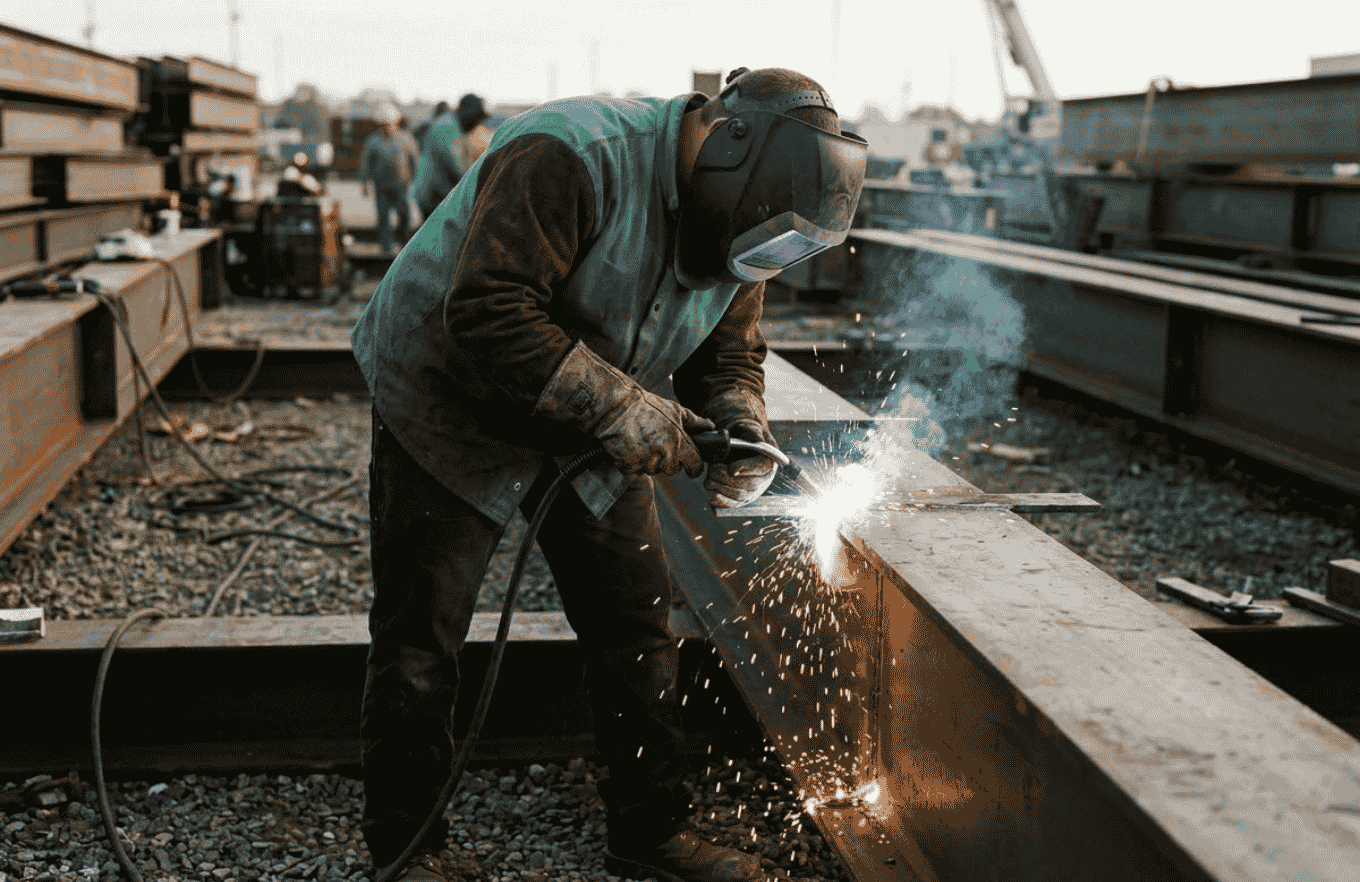
Material selection directly influences the construction and practical performance of welding workwear. FR fabrics can provide resistance to flame-related hazards, while leather can reinforce areas exposed to greater levels of sparks, spatter, and abrasion.
Flame-Resistant Workwear must also remain practical for regular use. Excessively heavy garments can affect movement and increase discomfort during extended shifts. Combining materials can provide targeted coverage without unnecessarily adding bulk.
FR cotton offers a balance of comfort and protective performance, while cow split leather can be used in higher-exposure areas where additional reinforcement is required.
Samad Workwear's welding garments show how material selection and garment engineering can be combined for specific workplace requirements.
The FR Cotton + Leather Welding Jacket features a 450 GSM FR cotton body, full cow split leather sleeves and a leather shoulder cape covering the chest and upper back. It also includes a stand-up collar with leather-lined neck protection, concealed front closure with storm flap, articulated elbows, adjustable cuffs, utility pockets, reinforced transition seams and heavy-duty bar-tack stitching.
The FR Cotton + Leather Bottom Coverall uses a 450 GSM FR cotton upper with cow split leather front leg panels extending from thigh to ankle. Leather knee reinforcements, adjustable waist tabs, utility pockets, side-leg access zippers, reinforced transition seams, and extended back coverage further support its workwear design.
Both garments comply with EN ISO 11611 Class 2, EN ISO 11612 and EN ISO 13688.
EN ISO 11611 Class 2: Covers protective clothing for welding and allied processes, with Class 2 addressing higher-risk welding conditions.
EN ISO 11612: Covers clothing designed to protect against heat and flame through defined performance requirements.
EN ISO 13688: Establishes general requirements for protective clothing, including ergonomics, sizing, marking and manufacturer information.
These standards address different aspects of protective clothing. Buyers should therefore assess the requirements relevant to their specific welding applications rather than treating certification as the only purchasing consideration.
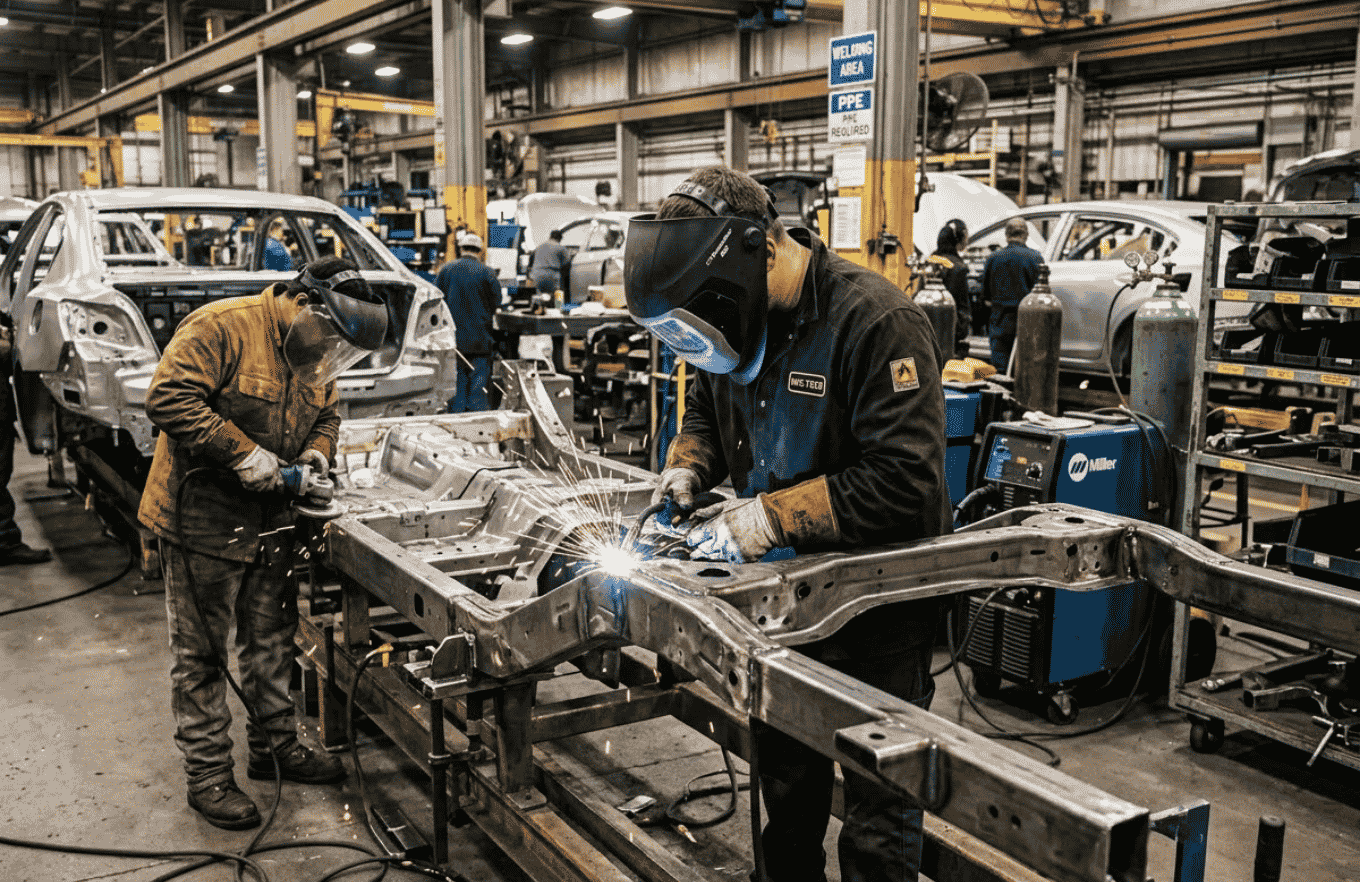
The lower body can experience significant exposure when sparks and hot particles fall from elevated work positions. For applications involving substantial spatter, standard trousers may not provide the required coverage.
This is where Molten Metal Protective Clothing becomes an important consideration. Buyers should assess lower-body coverage, reinforcement, closures, and areas subject to repeated contact or abrasion.
The Samad Workwear’s Bottom Coverall provides leather front leg coverage from the thigh to the ankle, reinforced knee panels, and extended back coverage. Adjustable waist tabs also support practical fit control.
Welding involves reaching, bending, kneeling, and positioning equipment. Protective garments should accommodate these movements without creating unnecessary restrictions.
The welding jacket's articulated elbows and adjustable cuffs support practical movement and fit. The coverall's adjustable waist tabs and side-leg access zippers provide additional flexibility during use.
Correct sizing is equally important. Garments that are too loose can interfere with movement or equipment, while overly tight clothing can restrict mobility and affect comfort.
Welding workwear is used across industries involving fabrication, repair, installation, and metalworking, including:
● Construction and structural fabrication
● Oil and gas operations
● Automotive manufacturing and repair
● Shipbuilding and marine fabrication
● Heavy engineering
● Metal manufacturing
● Industrial maintenance
Each environment presents different processes and exposure levels, so garment selection should always begin with an assessment of the actual workplace hazards.
We combine FR cotton, cow split leather, and purpose-focused garment construction to address different areas of welding exposure.
For industrial buyers, features such as reinforced seams, articulated construction, functional closures and targeted leather coverage demonstrate why garment engineering matters alongside material selection. The documented standards also provide a useful reference when evaluating workwear against specific workplace requirements.
Need welding workwear matched to demanding industrial conditions? Contact Samad Workwear to discuss suitable garments, protective coverage, sizing, and bulk requirements for your workforce.
Finishing this off by saying that choosing Welding Protective Clothing requires consideration of exposure, materials, coverage, mobility, fit and applicable standards. FR cotton and leather can serve different requirements within a purpose-built garment, particularly where sparks, spatter and abrasion are key considerations.
Samad Workwear brings these elements together through welding-focused garment construction and documented compliance with relevant protective clothing standards, giving industrial buyers practical factors to consider when selecting workwear.
Welding garments should provide appropriate coverage and use materials selected for the expected heat, flame, sparks, spatter, and abrasion hazards.
Protective clothing is one part of welding safety. Depending on the task and workplace assessment, workers may also require suitable eye, face, hand, respiratory and hearing protection.
It may be appropriate for welding and related applications involving significant exposure to hot metal particles, sparks, spatter and associated heat hazards.