Explore how industrial work trousers support mobility, durability, protection, and comfort while helping businesses select suitable garments for demanding jobs.
Industrial work trousers need to provide more than basic coverage. Workers in construction, manufacturing, maintenance, logistics and other demanding environments may spend long hours bending, kneeling, climbing, lifting and handling tools. Poorly designed trousers can restrict movement, wear quickly at stress points or lack practical storage.
For businesses selecting workwear, the challenge is finding the right balance between durability, mobility and everyday comfort. A reliable Industrial Workwear Supplier should consider the tasks employees perform, workplace conditions, required protection, garment construction and maintenance requirements before recommending a suitable design.
Industrial trousers experience repeated movement, abrasion, dirt, equipment contact, and frequent laundering. Their suitability therefore depends on more than fabric weight alone.
Features such as reinforced seams, durable panels, ergonomic construction and functional pockets can improve everyday practicality while allowing workers to move naturally.
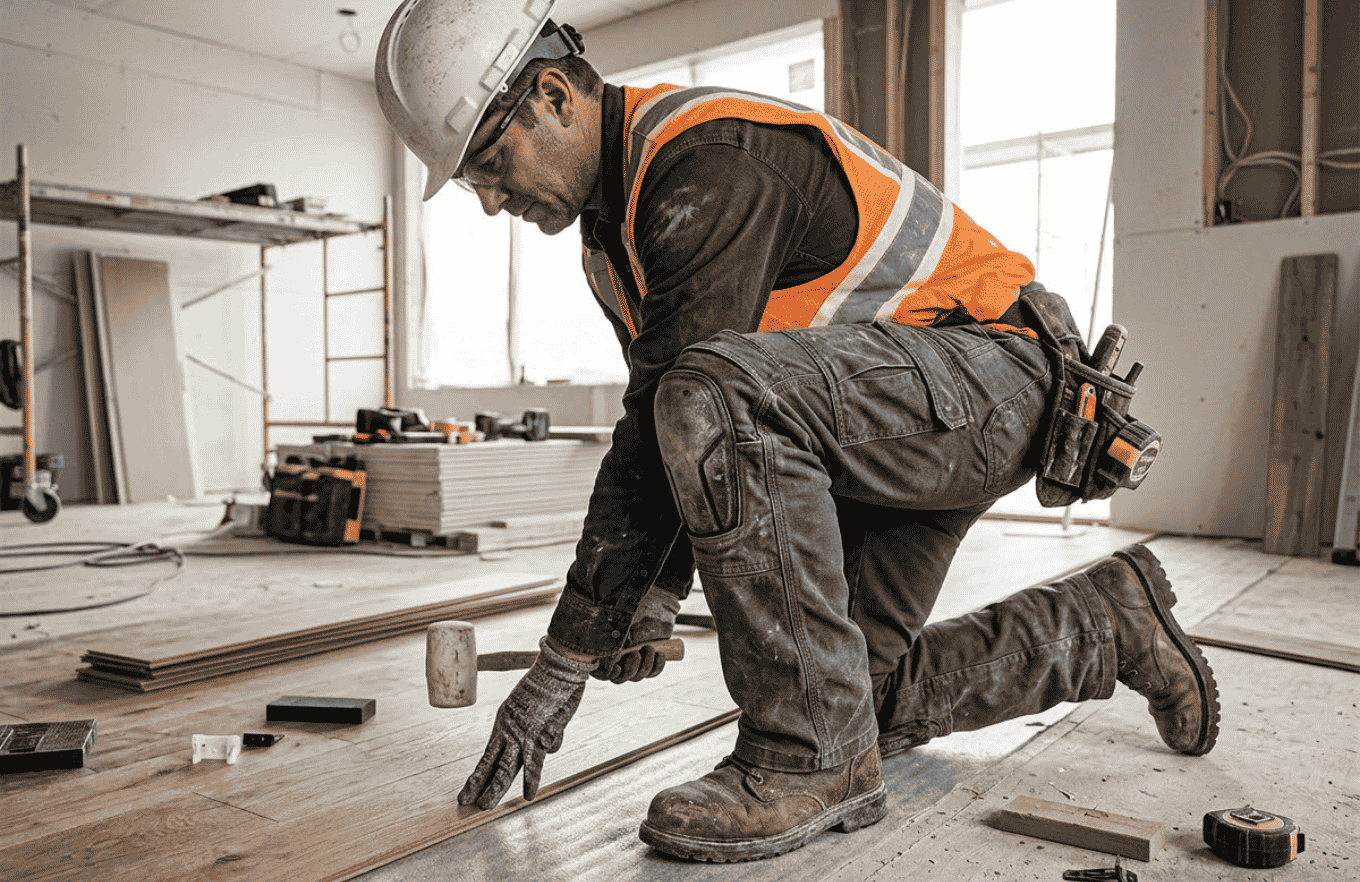
Workwear selection should begin with how the trousers will actually be used. Workers who regularly kneel may need dedicated knee protection, while technicians carrying tools may benefit from multi-pocket configurations.
Jobs involving climbing, squatting, or frequent movement can also require flexible construction. Selecting trousers based only on appearance or fabric thickness may overlook these practical requirements.

Fabric should reflect the expected level of wear. Denim, canvas, cotton blends and performance fabrics can serve different applications depending on the required combination of durability, flexibility, breathability and maintenance.
Reinforcement is particularly important around high-stress areas such as knees, crotches, pockets, seams and attachment points. Stretch panels can improve mobility, while reinforced materials at pressure points can provide additional durability without making the entire garment unnecessarily heavy.
Comfort is an important part of workwear performance. Employees wearing trousers throughout an entire shift need garments that support natural movement without excessive looseness or restriction.
Ergonomic panel construction can help trousers move with the body during bending, kneeling and climbing. Adjustable features can also support a more practical fit.
The garment should also work alongside other PPE. Knee protection, safety footwear, harnesses and other equipment should not be unnecessarily obstructed by the trouser design.
Samad Workwear offers purpose-built trouser designs combining mobility, reinforcement, storage and workplace functionality.
The Clip on Trouser features stretch panels, a KneeGuard™ system with knee protection certified according to EN 14404, stretch CORDURA® at pressure points, reinforced crotch seams, triple-needle stitching, industrial wash suitability and top-loading kneepad pockets with flap and Velcro closure.
The Roadster provides multi-pocket storage, a front D-ring, ergonomic work fit, reinforced stitching at stress points, ergonomic panel construction, and multi-seam construction designed to support movement and wearer comfort.
The Clip on Trouser is specified to EN 13688, EN 14404 and EN ISO 15797, while Roadster is specified to EN 13688 and EN 14404.
EN 13688: Covers general protective clothing requirements, including ergonomics, sizing, labelling, innocuousness, and manufacturer information.
EN 14404: Specifies requirements for knee protectors and protective clothing intended for workers performing tasks while kneeling.
EN ISO 15797: Provides test procedures for evaluating workwear suitability for industrial washing and finishing processes.
These standards address different areas of performance, so buyers should confirm which requirements apply to the complete garment and intended application.
Storage is an important consideration when selecting industrial trousers. Workers may need quick access to hand tools, fasteners, measuring equipment, pens, and other small items.
However, useful storage is not simply about adding more pockets. Their positioning, reinforcement, closure, and accessibility should work with the garment's overall construction and movement requirements.
Features such as a front D-ring and reinforced pocket edges can provide additional functionality where appropriate.
Durable work trousers are used across construction, manufacturing, mechanical maintenance, utilities, transportation, warehousing, engineering, installation, and industrial services.
Construction workers may require reinforced knees for frequent kneeling, while maintenance technicians may place greater emphasis on tool storage and mobility. Warehouse employees may benefit from lighter construction that supports extended movement.
A Protective Clothing Manufacturer should therefore consider the actual application rather than treating one trouser specification as suitable for every workplace.
Even well-constructed workwear requires appropriate care. Buyers should review washing instructions, shrinkage considerations, fabric behavior and compatibility with their laundering process.
Regular inspection can identify damaged seams, worn reinforcement, broken closures and deteriorated knee pockets. For larger workwear programmes, industrial laundering requirements should be considered before purchasing.
Selecting garments tested for appropriate industrial washing processes can also help businesses establish more consistent maintenance routines.
We develop workwear with attention to garment construction, movement, reinforcement, storage, and workplace requirements.
For businesses purchasing at scale, working with a Safety Garment Manufacturer can also make it easier to discuss specifications, sizing, customization, sampling, and production requirements before larger orders are finalized.
This approach allows businesses to evaluate trousers according to actual job requirements rather than relying on generic uniform designs.
The right industrial trousers should reflect actual working conditions. Buyers should assess fabric, reinforcement, mobility, storage, knee protection, laundering requirements, sizing, and applicable standards before placing an order.
An experienced Industrial Workwear Supplier can help translate these requirements into practical garment specifications while ensuring that design and production considerations remain aligned with the intended application.
Looking for industrial trousers built around the way your workforce actually works? Contact Samad Workwear to discuss Customised designs, technical specifications, sampling, and bulk workwear solutions.
Choosing industrial work trousers requires a practical assessment of how workers move, what they carry, where garments experience stress, and how frequently they are washed.
Features such as ergonomic construction, reinforced stitching, durable panels, tool storage and knee protection can improve everyday functionality when selected according to the job.
Our Clip on Trouser and Roadster demonstrate how industrial trousers can combine practical construction with movement and task-specific features, helping businesses make more informed workwear decisions.
They should provide suitable durability, ergonomic movement, reinforced stress points, practical storage, appropriate fit, and any task-specific protection required for the workplace.
They can be suitable where workers regularly perform kneeling tasks, provided the complete garment and knee-protection system meet the requirements of the intended application.
Businesses should assess garment construction, materials, customization options, applicable standards, sizing, laundering requirements, production capacity, and the supplier's ability to meet specific workwear requirements.